9/5/09

"Asterios Polyp" by David Mazzuchelli

What three things would you grab if your house were burning and you had to leave immediately? That's the question posed, both real and theoretically, to Asterios Polyp, the title character of David Mazzuchelli's new graphic novel. This question poses more of a problem for Asterios than for most people because he prefers to use dichotomy to structure his life, dividing everything cleanly into two opposing pieces. He proceeds to chop his world into pieces until he meets a woman named Hana, who is more comfortable with uncertainty and shades of gray. She's the one that asks him the question hypothetically, and it's clearly in his head at the beginning of the book as we watch lightning strike and burn down his New York apartment. But even Occam's razor can't explain why he eventually gives away the three items he's rescued from the burning building. For that answer you have to read the book.

The book is narrated by Asterios' twin Ignatz, who died in childbirth. He tells the story of Asterios, an over-educated architect who has never designed anything actually built, and who teaches college and moves through life with a purpose, but without direction. He constructs rules for dealing with life and quotes them to his students as if they were the bible. As his star is rising he meets a sculptor and artist named Hana, who appreciates and loves his world, but also brings fuzziness to his life, complicating things.

For some reason as I read the story the word 'erudite' kept popping into my head ("characterized by learning"). Asterios is someone who's interesting to be with because he makes you feel smart. At least until he uses his analytical mind on you, at which point the dissection can become uncomfortable, but makes for compelling reading. Mazzuchelli isn't afraid to take side trips while telling the story, and I appreciated that. It reinforces theme: here's an intelligent guy, but he still has a lot to learn. This is reflected in a scene with one character who pontificates that after the 60's the goverment realized that an educated people were too hard to govern, so that why they've cut school funding for the past 30 years. There are also numerous allusions to the question of God vs gods vs free will; what makes a relationship work (the answer is shown with 3 beer coasters); and even a retelling of the Orpheus legend.

To enrich his storytelling efforts Mazzuchelli throws in tons of literal and graphical puns. The character's name, for example: Asterios, meaning a star, perhaps the star of the book and his life. But then adds 'polyp' to the name: an abnormal growth of tissue projecting from a mucous membrane, reflecting Asterios' feelings that he should have died instead of Ignatz.

Another example is that the story is illustrated in monochrome shades of primary colors. The flashbacks are blue when it's Asterios alone, and red when they include Hana, while the present-day story is told in shades of yellow. As the story concludes, and moves into the immediate present it suddenly combines the three colors, bringing both the narrative and the color scheme into harmony. Similarly he draws Asterios with strong, bold outlines, often including his ghostly brother as a dotted line, while Hana and her life is sketched in uncertainty. I especially liked the mysterious spotlight that comes and goes out of frame in synch with Hana's self-esteem.

If I had one complaint about the story, it's that the resolution felt hurried, and the final pages throw in a curveball that feels like a beanball. I would have preferred an ending that stretched out the resolution by another 20 or 30 pages, maybe adding some internal hurdles for Asterios to leap. And while the final page isn't completely out of the blue, it was too contrived for me. Just let me say that they lived happily ever after.

My 12 year-old son read the book as well, and his comment was: "Ok, a bit heavy on the philosophizin' and art theory." I'd put the book down as a PG-13 rating. The graphics and story are great, as well as the printing. This book has been on everyone's top 10 list for 2009 graphic novels, and I'd say it's a good bet it will stay there. Mazzuchelli's previous work City of Glass (with writer Paul Karasik) was chosen as the quintessential New York graphic novel. You can buy this book online at Amazon through the links below, or at Powell's Books.


Reblog this post [with Zemanta]

9/2/09

Astro Boy Movie trailer now online


The trailer for the new Astro Boy movie is online. It looks a lot better than the disappointing four-issue movie prequel from IDW Publishing. The animation is in the same vein as Jimmy Neutron, although it looks less annoying, more aesthetically pleasing. The movie comes out 10/23/09.

From the trailer it looks like they tried to continue with the themes Osamu Tezuka's often addressed in the original Astro Boy manga, questions such as: "What makes us human?", "Where is the soul?" and whether the human race can reconcile differences and live in harmony rather than continually fight for power and control over others?
When I was a kid I only got a small glimpse into the Astro Boy world because most of the stories had never been translated, but thanks to Dark Horse Comics you can now get the full suite of Tezuka's books in English.
Purchase them online at Amazon.com, or Powell's books.


Reblog this post [with Zemanta]

8/20/09

"A History of Violence" by John Wagner and Vince Locke


I just read "A History Of Violence". Cripes it's gripping! I'd seen ads for the movie with Viggo Mortensen, but wasn't that intrigued. Then I saw the book at the local library and consumed it standing up in less than an hour. I was shaky with adrenaline by the last page.

The art is sketchy, and sometimes some of the characters look the same, but the writing and dialog is distinctive, and the subject matter gripping. A man who's escaped his past of organized crime stops a robbery at work. His heroic actions attract the mob's attentions, and he and his family are threatened.

The last time I felt this was about a story was when I sat in the first row at "Goodfellas," and drank a 32oz Coke on an empty stomach. Read the graphic novel and get jazzed! (Buy it online at Powell's books.)


Reblog this post [with Zemanta]

7/9/09

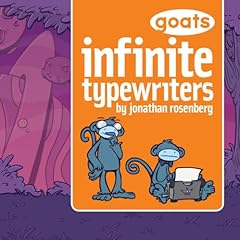
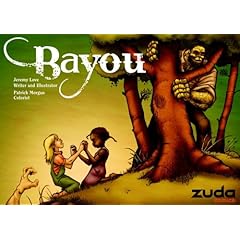
"Infinite Typewriters" by Jonathan Rosenberg, "Bayou" by Jeremy Love

Last spring at Stumptown Comics Fest Jeff Parker of Marvel Comics wondered whether weekly print comics would continue in the future. He theorized that monthlies will eventually be entirely online, and the only tangible printings will be TPBs or anthologies. While I haven't seen mainstream comics changing to weekly web versions, I notice that two of the notable Graphic Novels from 2009 are exactly this: web comics compiled and printed by larger publishers.


Goats: Infinite Typewriters by Jonathan Rosenberg is a nicely bound paperback printing of a couple hundred of the webcomics. It's the first in a trilogy, followed by The Corndog Imperative and The Showcase Showdown. While it's a collection of strips, they fit nicely together to tell ongoing stories of the origin of Diablo the Satanic chicken, his Machiavellian offspring Oliver, and other various humans, aliens and semi-intelligent animals. The plots usually involve God, Satan, Robert Goulet and some (cartoon) violence and (real) swearing. I'd have to say there was a laugh in every comic, which is a lot better record than anything printed in the newspapers today. My 12-year-old son, however, told me that Goats is not appropriate for younger kids, and while he meant his younger brother, I'd say that any adult should read it before giving Goats to a kid younger than 17.


Bayou , on the other hand, is a book that Tweens should read. As Publisher's Weekly sums up:
Bayou follows a young African-American girl in 1930’s segregated Mississippi, who sets off on an adventure in a fantastical South to save her father, who is wrongly accused of a crime.

The crime is suspected kidnapping of Lee's young white friend Lily, and we see from Lee's point of view that the girl was eaten by a fantastical monster called Cotton-eye Joe.

Bayou has many great qualities. First, there's the art, which translates well to both the web and the page. The drawing are simple, without being cartoony -- unless it's called for by the story. The colors are well used to support the characters emotions and settings.

Then, there's the story itself. Love deals with the events frankly, whether it's looking for a dead boy in the swamp, killing a chicken for dinner, or two friends enjoying time together in a field. He weaves in the issues of racism and poverty without being preachy. The characters feel authentic.

And finally, the best part of Bayou is seeing the story from Lee's point of view. We don't know for sure whether the monsters of Bayou and Cotton-eye Joe are real or not, but they're real to her. When she sees sprites under the swampwater she can't believe her eyes, but because it's coming from this young girl it helps us believe them all the more.

Bayou is the first Zuda webcomic to make it to print and DC plans to release more print versions of original Zuda webcomics later this year.

You can read the webcomic here, or buy the Bayou paperback from Amazon.


Reblog this post [with Zemanta]

6/10/09

"Moomin Book One: The Complete Tove Jansson" by Tove Jansson

In fifth grade I discovered the Finn Family Moomintroll books. By Finnish author Tove Jansson, these books tell odd stories about human-sized hippo-like characters who experience magic and nature in a world slightly like ours. Or, maybe more like Finland of the 30s and 40s. From the happy-go-lucky episodes of the "Finn Family Moomintroll," to the alluring private adventures Moomin experiences in the "Moominland Midwinter," to the surreal and almost frightening epic of the "Comet in Moominland," I was enraptured by the stories. I must have re-read each book at least three times, spending hours one summer in the hammock, while immersed in the frigid tale of the squirrel with the bushy tale who froze to death (or not!?). I couldn't get enough of the characters, and I was amazed both by how many people I met had never heard of the Moomintrolls, and also whenever I found an artifact from the world of Tove Jansson.

So, imagine my surprise when I was at Powell's books a couple years ago and saw "Moomin Book One: The Complete Tove Jansson Comic Strip." I bought it for my kids (yeah, sure) but read it myself. How could these comics have never crossed my path until published by Drawn & Quarterly Press in 2006? According two the description on Powell's website:
"Tove Jansson is revered around the world as one of the foremost children's authors of the twentieth century for her illustrated chapter books regarding the magical worlds of her creation, the Moomins. The Moomins saw life in many forms but debuted to its biggest audience ever on the pages of the world's largest newspaper, the London Evening News, in 1954. The strip was syndicated in newspapers around the world with millions of readers in forty countries. Moomin Book One is the first volume of Drawn & Quarterly's publishing plan to reprint the entire strip drawn by Jansson before she handed over the reins to her brother Lars in 1960. This is the first time the strip will be published in any form in North America and will deservedly place Jansson among the international cartooning greats of the last century."
The strips have a funny revisionist quality, sort of like the Superman stories in the Sunday comics in the 40's. The characters and the drawings are the same, but the situations are different from the "real world," and the strips don't attempt to achieve a storyline like the novels. Instead they follow the antics of the Moomins as they deal with situations like a new maid, or how they react to living in a hotel on the Riviera (apparently the Moomins have been doing all right for themselves!). But, both people who are well-versed with the Finn Family Moomintrolls, and new readers will like the stories, although the comics are really only a gateway to the best stuff: the books.

When I bought the book I only saw "The Complete Tove Jansson Comic Strip." When I finished reading the strips I closed the book and gazed at the cover for a moment before I realized it also said: "Book One." How many more strips are there? Well, the people at Drawn & Quarterly are releasing "Book Four" in June 2009, and I hope there are many more. Click here to see a preview of "The Complete Tove Jansson Comic Strip Book Four." (Oh, and click here for a preview of another Tove Jansson book, "The Book About Moomin, Mymble and Little My.")


Reblog this post [with Zemanta]

5/15/09

Comics on Comics

Tubefilter spotlights a fun webcast called Comics on Comics where comic geeks & creators discuss comics.
As they say:
Comics on Comics, hosted by Juan-Manuel Rocha, manages to consistently gather together extremely informed panels and never, with the exception of Comic-Con or Wizard World, have I heard such geeky language centered around the medium. All of this with a set of three comedians. I love it.


Reblog this post [with Zemanta]

5/12/09

"Tintin in the Land of the Soviets" by Hergé

I remember the first time I ever saw a Tintin comic. I was probably in first or second grade, and my grandmother had given me a subscription to Humpty Dumpty Magazine (with a tagline of "for little children"). Amidst the easy reader stories and sometimes confusing poetry and projects I spotted a crisply-drawn story of a young reporter and his white dog treking through the mountains of Tibet. I couldn't keep my eyes off the pages, but unfortunately the story was serialized and I would have to wait another month for the next installment. I remember gathering the

Humpty Dumpties as they showed up in the mail, wrapped in paper like a brown paper bag, and flipping through the pages looking for the distinctive comic strip. I don't think I ever finished the story of Tintin in Tibet in Humpty Dumpty because the subscription ran out, and my grandmother switched us to National Wildlife. The photos were nice, but no Tintin, dang it! So I kept the short stack under my bed and would re-read the Tintin storyline as he learned about stupahs (pass on the right!), searched for his friend Tchang, and had close calls with the Abominable Snowman.

Somehow my mom learned that I liked Tintin, and she bought me a hardcover copy of The Red Sea Sharks, which I still have today. That was published by Methuen, a British publisher, and had the price in pounds and pence, so I guess that in the early 70's Tintin was still fairly rare.

Over time I got more of the stories and continued to devour them, reserving a special place on my bookshelf for the oversize volumes. Later I visited France and picked up copies of "Le Secret de la Licorne" (The Secret of the Unicorn) and "Le Tresor de Rackham le Rouge" (Red Rackham's Treasure) and read the stories in the original language, which was when I discovered Thompson and Thomson weren't their real names, but rather Dupond and Dupont (Likewise, Snowy's French name is Milou, and Professor Calculus is Tournesol, which means Sunflower in French).

But my crowning Tintin discovery was a volume I found in a Virgin Megastore in Marseille on another trip to France. Everyone knew that in the US there had been 21 Tintin stories released, but in France they had also published Tintin Au Congo (Tintin in the Congo) which depicted the natives of the Congo, a French territory, in a racist and demeaning way. But this volume I found contained something more rare than that.

It was called Tintin en Noir et Blanc, and it contained all nine of the original Tintin stories drawn by Hergé for Le Petit Vingtième, a weekly comic insert found in the Belgian newspaper Le Vingtième Siècle ("The Twentieth Century") in the 1930's. The stories are

  • Les Adventures De Tintin Reporter Du "Petit Vingtieme" Au Pays Des Soviets
    (Tintin, Reporter for the Petit Vingtieme among the Soviets)
  • Tintin Au Congo (Tintin in the Congo
  • Tintin En Amerique (Tintin in America)
  • Les Cigares Du Pharaon (The Cigars of the Pharaoh)
  • Le Crabe Aux Pince D'Or (The Crab with the Golden Claws)
  • Le Lotus Bleu (The Blue Lotus)
  • L'Oreille Cassee (The Broken Ear)
  • L'Ile Noire (The Black Island)
  • Le Sceptre D'Ottokar (The King Ottokar's Sceptre)

The comics are in black and white and in a small 4"x5" format but they are in hardcover, and exactly as drawn by Hergé the first time he told the Tintin stories.

I hear you exclaim: "The first time?" Yes, it's a wonderful discovery. When Hergé (Georges Remi, Hergé is the French pronunciation of his initials reversed: RG) first drew for the Petit Vingtieme he was only 22, and he would have to draw a two page comic each week. The first ten pages of Tintin Au Pays Des Soviets is pretty rough, pretty soon he was drawing and writing Tintin consistently, and the boy reporter took on the features that most of the world would recognize: his slightly bulbous nose, his trench coat, the occasional pratfalls, and of course the distinctive cowlick. Hergé continued to draw Tintin in the newspaper supplement until the Germans invaded Belgium in World War II. After the war Europe was in chaos, and Hergé also had personal and professional troubles, but he eventually got himself back to work and his popularity was enough to create a workshop where the books were re-drawn and colorized...all except "Au Pays Des Soviets."


So, when I found a copy of Tintin Among the Soviets I was really excited. This was like the Holy Grail of Tintin comics (at least, of the ones I could afford), so I purchased it for 400 Francs -- about $60! -- which was a lot for an unemployed backpacker traveling Europe, and hauled it around in my pack for a month or so until I shipped it home to Portland, Oregon at another considerable expense.

For years I'd pull out the books and read them, but when I tried to get my kids interested in Tintin I also wanted to show them the original books. They were nonplussed, and I couldn't figure out why until I realized that my kids couldn't read French. So, I read the books to them, or read them myself, and then put them away.

Then, this year, I got another surprise. I was at the library and saw a full-size printing of the black and white Tintin in the Land of the Soviets. Apparently it was finally translated and printed in English (but in England) in 1999. The copy I had was published in the US in 2007.

As a Tintin story the book is pretty linear. Tintin goes to Russia to report on "foreign affairs." Hergé doesn't have a subtle view of the Soviets, and it shows in the story. The Soviet government is worried that a reporter will tell a slanted story about their country...which is that the rulers are living high on the hog while the people are starving. To stop him from reporting, Tintin is shot at, jailed, tortured, and bombed, but he always pulls through and makes monkeys out of the Soviets. Eventually he catches a plane and a train home to Brussels and the readers of the Petit Vingtiems are waiting at the station to give him a heroic homecoming.

It's a fun read, but it's more interesting to see how Tintin started out, and how strongly Hergé's political views influenced his stories -- at least at the beginning of his career.

You can see a PDF document of the book here. Or, you can buy the book from Amazon.

Here are two pretty good sites for Tintin information: The Cult of Tintin at Tintinologist, and apparently Steven Spielberg is working on a Tintin movie to be released in 2011.

Update: Also check out my essays on Tintin in Black & White, Part 1 - The Cigars of the Pharaoh, and Part 2 - The Crab with the Golden Claws.


5/7/09

Stumptown Comics Fest 2009 - Comic Reviews #1

Here are some pocket reviews of the comics I picked up at Stumptown Comics Fest 2009.


Onion Head Monster: Attacks by Paul Friedrich ($10, b&w, at onionheadmonster.com).
Onion Head Monster should be syndicated in the daily comics. Stylistically rendered in black and white, each page has action and a laugh, which is more than most people ask of Dagwood, Ziggy and Mutts.
This volume tells the story of Onion Head Monster's vacation in Ant City, his path of destruction, and the happy resolution. It also includes a reprinting of an unauthorized parody "Onion Head Monster Gin Drinker," which has to be read to be understood.


PolyNothing by Joshua Kemble ($2, b&w, at www.joshuakemble.com)
I spoke to Josh while he was at his booth. He had a couple other interesting books, but with so many comics to choose from, I was targeting items $5 and under.
I chose PolyNothing for $2, which is the beginning of a semi-autobiographical story about losing his father to cancer and "confronting the ghosts of one's past."
The way he renders the "ghosts" is really cool, and the sparse dialog gives impact to the story.


Neon Girl #1 by Dennis Pacheco ($3, b&w, at www.pigeonholepress.net)
Neon Girl has no hidden agenda, except perhaps the color of Atom Girl's underwear. Oh, wait... that's clearly shown on the cover.
This comic revels in a slam-bang, no holds barred cat fight between Neon Girl and a jealous Atom Girl who suspects the other of stealing her boyfriend Red-eye.
Pacheco does a great job of both capturing and spoofing super hero women in action. The art is clean and exciting (heh).


Emily & the Intergalactic Lemonade Stand by Ian Smith and Tyson Smith ($12.95, color, at www.slavelabor.com)
Lemonade Stand is a nicely-printed slick book marketed toward kids or adults who watch the Nickelodeon channel. It portrays a love triangle between Emily, who loves her robot Juicer and wants to buy a pony, a boy named Jace, who also loves robots, but cares nothing for ponies, and Daisy who wants to steal Juicer so she can have Jace's affections.
I had some problems with the story in that they didn't explain how Emily got Juicer, but maybe that was in an earlier volume. Overall, the art is really great, and the story was entertaining enough.


Maintenance #2 written by Jim Massey, art by Robbi Rodriguez ($9.95, b&w, at www.onipress.com)
At Stumptown 2008 I purchased a copy of Maintenance #1, and both my son and I ate it up. So, when I spotted the Oni Press table this year, I knew I had to get the next volume.
Part "Red Dwarf," and part "Men in Black," Massey & Rodriguez document the troubles and antics of Doug and Manny, two maintenance men who work in a super secret evil scientist facility called Terromax.
The art has the occasional hint of Wally Wood at EC comics.

Zeek ..the Martian Geek Full Color Special by Brian Cattapan ($5, color, at cattapancomics.com)
I asked the artist how he published the full color special of Zeek...the Martian and he admitted he ran it off on a color printer, which must have been expensive!
Zeek was sent to Earth to find women, but is now just trying to have a good time. There were some laffs, and the art was amusing, if not polished.

I picked up some Free! strips by Nick DeAngelo (Free! leochicken.deviantart.com).
Free is always a good price!

Herman the Manatee Volume 1 by Jason Vialo ($3? b&w, at www.manateepower.com)
This small volume has a series of strips about Herman, a manatee who has been hit by speedboats 257 times. The art was nice, although the jokes were a little repetitive.


Reblog this post [with Zemanta]